Scillonian Seasickness Guide
How rough is the crossing? Tips, remedies and alternatives.
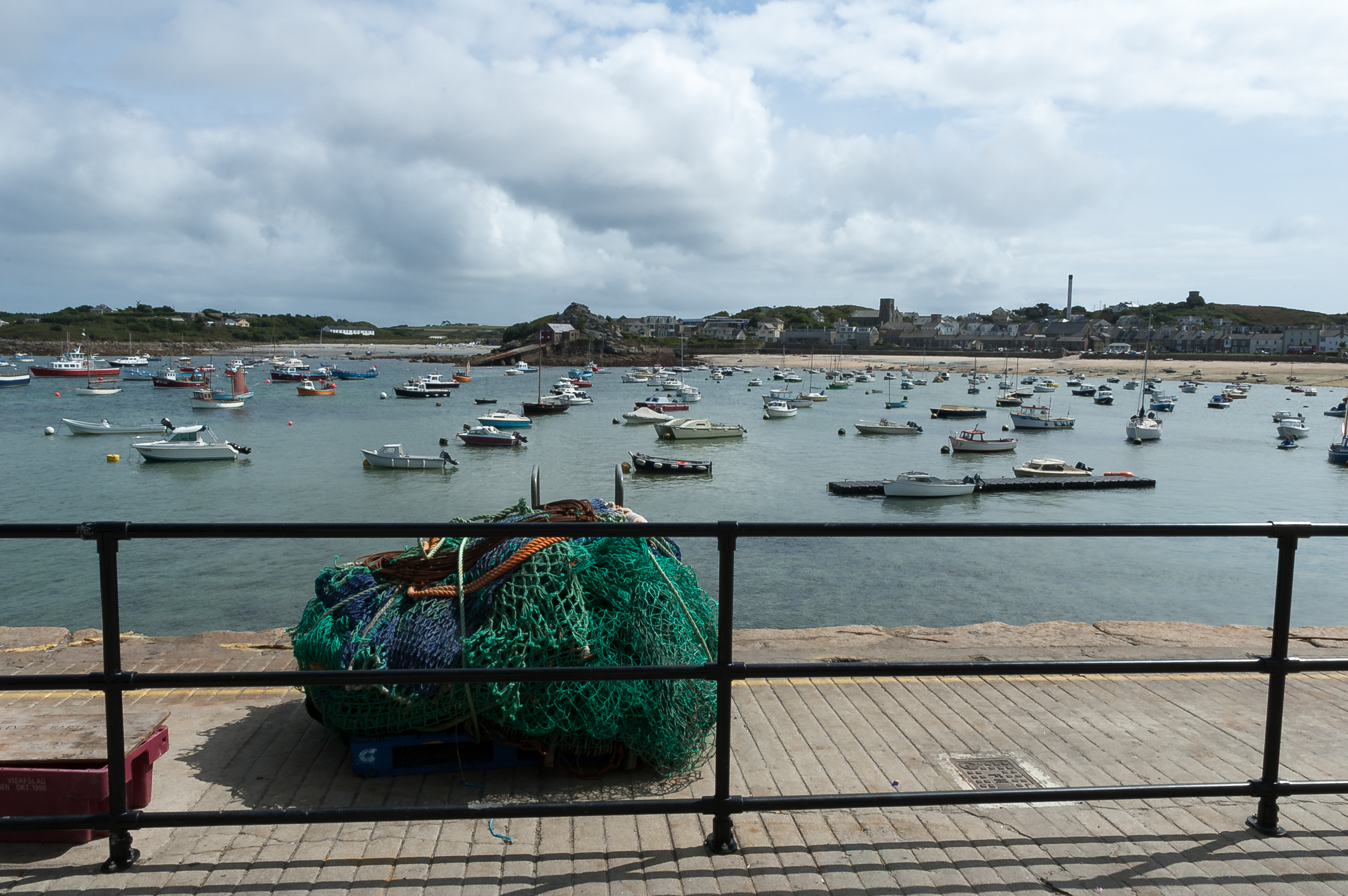
Photo: Hugh Town harbour, St Mary's (26 August 2006) — Chris Gorringe · CC BY-SA 2.0. Display may be cropped. Photo details.
Independent guide — not affiliated with any operator. All prices, times and policies are indicative. Verify with operators before booking. Editorial Policy · Research · Disclaimer
Sources: NHS — Motion Sickness, Isles of Scilly Travel
How Rough Is the Scillonian Crossing?
The Scillonian III crosses approximately 28 miles of open Atlantic sea between Penzance Harbour and St Mary's. It is a working ship on an exposed route, and the sea conditions can vary considerably between a glassy summer day and a breezy spring crossing.
In settled conditions — which are most common in June, July and August — the crossing is usually very pleasant. The journey takes around 2 hours 45 minutes, with the chance to watch the coastline recede and the islands come into view. In less settled conditions, particularly in spring and autumn, the vessel can move considerably, and some passengers do experience seasickness.
The good news is that there is plenty you can do to prepare — and if seasickness is a real concern, there are excellent alternatives that avoid the sea crossing entirely.
Seven Tips To Avoid Seasickness
Take medication in advance
Over-the-counter remedies such as Stugeron (cinnarizine) or travel sickness patches work best when taken before you board — not once you feel ill. Consult a pharmacist about the best option for you.
Choose the right seat position
Sit in the middle of the vessel at a lower deck level. The stern (rear) of the ship tends to move more than amidships. Avoid the bow in rough conditions.
Look at the horizon
Fixing your gaze on a stable external point — the horizon or the distant coastline — helps your brain reconcile visual and vestibular signals. Avoid looking at screens or reading below deck.
Eat sensibly beforehand
A light meal before departure is better than travelling on an empty stomach. Avoid alcohol, heavy fatty foods and strong smells before boarding. Ginger can help — try ginger biscuits or ginger tea.
Get fresh air on deck
Fresh air on the outer deck is significantly better than being confined below. If you begin to feel unwell, get outside immediately and focus on the horizon.
Consider acupressure bands
The NHS notes that acupressure bands may help some people but do not work for everyone. Ask a pharmacist about suitable options.
Consider flying instead
If seasickness is a genuine concern, Skybus from Land's End (approximately 20 minutes) or the Penzance Helicopter (around 15–20 minutes) are both excellent alternatives that avoid the crossing entirely.
When To Consider Flying Instead
If seasickness is a genuine concern for you or someone in your group, the simplest solution is to fly. Skybus from Land's End takes approximately 20 minutes. The Penzance Helicopter takes around 15–20 minutes. Both avoid the sea crossing entirely.
Medical note. This guide is for general travel planning information only. Always consult a pharmacist or GP before taking medication, especially if you are pregnant, have a medical condition, or are buying for children. The information on this page is not medical advice.
FAQ
Scillonian Seasickness — FAQs
Continue Reading
Compare All Travel Options
Ferry, Skybus and helicopter compared side by side.
Read moreFirst-Time Visitor Guide
Everything you need to know before your first visit.
Read moreTravel Calculator
Find the best option for your group and travel month.
Read moreFAQ
Practical answers about dogs, luggage, cancellations and more.
Read more